
ChatGPTOpenAI
Flexible-Divergent
Default mode network + cognitive flexibility
Opens branches and adapts to you.
ThreatSycophancy: telling you what you want to hear.

ThinkIA · a tool invented by Engel Fonseca to test SPH VS SPH or SPH VS SPA
A 10-question test for executives that turns the way you think into a visible map.
Identify your thinking type according to cognitive neuroscience, your paradigms, your cognitive biases and the natural fears of your Human Thinking System. With the Thinktech method of technological metacognition.
A THOUGHT CAN BE ASSIGNED
You are not your brain nor what you think: you are the one who conducts your mind, like a conductor before an orchestra. To conduct it, you first have to see it.
Take them out of your head and turn them into an object.
Look at them from a distance, as an object of study.
Become an expert at sparking reactions, not indifference.
When attributes connect, how we think appears.
An SPH (Sistema de Pensamiento Humano, Human Thinking System) is the cognitive, ethical and methodological architecture of your mind: the unique way you process the world and reach your conclusions. It is not what you know, it is how you think. In an organization, its leaders’ SPH defines its culture and its capacity to change.
SPH + SPA = algoritYO. An SPA (Sistema de Pensamiento Artificial, Artificial Thinking System) is AI’s capacity to process information. If you don’t give it your SPH, it improvises a generic framework; if you know it and share it, the AI becomes a reflection of how you think.
AIs think too, in their own way. Each assistant processes information with its own Artificial Thinking System (SPA): what it prioritizes, what it filters out, how it reasons and how it reacts under pressure. Its maker shapes it through training and rules. That is why ChatGPT and Claude can answer the same question differently. Knowing the SPA of the AI you use matters as much as knowing your SPH: if you don’t give it your SPH, the AI decides with its own. Read Engel Fonseca’s article (Spanish).
Dominant thinking type and analogous brain network of each assistant
Flexible-Divergent
Default mode network + cognitive flexibility
Opens branches and adapts to you.
ThreatSycophancy: telling you what you want to hear.

Executive-Procedural
Frontoparietal network + basal ganglia
Executes step by step inside your work.
ThreatEcosystem lock-in and tenant limits.

Associative-Integrative
Hippocampus + multisensory integration
Joins sources and formats into one hub.
ThreatMirrors the user: little critical pushback.

Reflective-Metacognitive
Prefrontal cortex + anterior cingulate
Evaluates, monitors errors and loops back.
ThreatOver-caution and long answers.
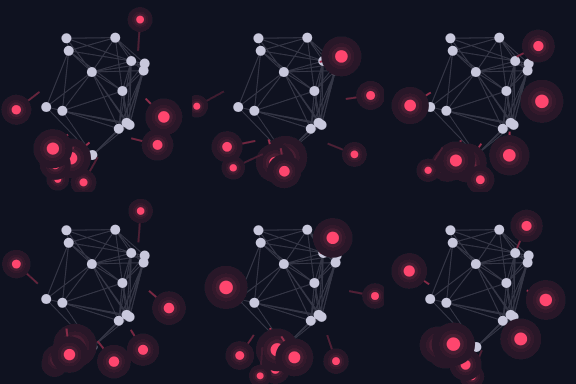
Disruptive-Explorer
Salience network + dopaminergic system
Breaks consensus in real time.
ThreatBias from its source (X) and a provocative tone.
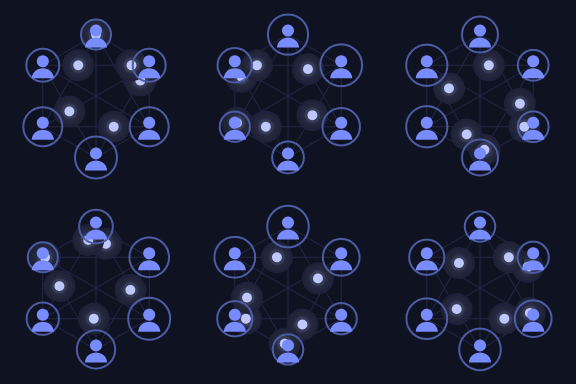
Social-Mentalizing
Mentalizing network (theory of mind)
Thinks from your relationships.
ThreatPrivacy: blends the personal with the commercial.
Each AI’s SPA read through the four layers of the Thinktech method. The red row is the threat an executive should watch before assigning that AI as a vertical agent (AGV).
| Layer | ChatGPT | Copilot | Gemini | Claude | Grok | Meta AI |
|---|---|---|---|---|---|---|
| Principles | Model Spec: helpful, respects your autonomy | Responsible AI: helpful, not servile | Maximum help without harm or offense | Constitution: judgment and honesty | Truth-seeking | Personal AI that understands your world |
| Filters | Model Spec and teen protections | Your organization’s permissions and data | Short list; explains its refusals | Risk and context judgment | The most permissive of the group | Mass social platform |
| Patterns | Versatile: fast or reasoned answers | Tasks inside Microsoft 365 | Multimodal, grounded in sources | Structured, flags its doubts | Direct and irreverent | Fast and everyday |
| Reactivity | Tends to give in if you push | Expressive in voice (Mico) | Adapts to your instruction | Holds its position; very cautious | Triggered by controversy | Triggered by the personal |
| Threat | Sycophancy: telling you what you want to hear. | Ecosystem lock-in and tenant limits. | Mirrors the user: little critical pushback. | Over-caution and long answers. | Bias from its source (X) and a provocative tone. | Privacy: blends the personal with the commercial. |
| Best AGV role | Generalist and prototyping | Corporate productivity | Research with sources | Analysis, legal and compliance | Trend monitoring | Conversational marketing |
| Context source | Your chat, memory and files | M365 mail, documents and calendar | Google Search and apps | Your chat and connected tools | Real time on X and the web | Meta’s social networks and messaging |
| | | | | |
N3 Labs hypothesis built from each maker’s public documentation (October 2026). The brain networks are a functional analogy: models have no brain, but the way they prioritize, filter, process and react resembles those systems. An SPA changes with every model version. Prepared with AI assistance, including Claude, one of the assistants assessed; N3 will validate it with blind tests.
A conversation of 16 short questions. At the end you will see the map of your Human Thinking System.
ENTERPRISE SPH
Engel Fonseca and Potenttial Group map your leaders’ Human Thinking System to foster Change Management on a neuroscientific foundation: how they will live the change, what holds them back and how to support them. With Prosci-certified Change Practitioners.
